
Introduction to Business Process Management - ver 1
In this article
Business Process Management (BPM) helps you create smarter workflows by connecting your suppliers and work orders in one centralized place. Think of it as having an "invisible manager" that handles repetitive tasks for you automatically.
Contents
Contents
What is Business Process Management (BPM)
Business Process Management (BPM) lets you define how work moves through your business — step by step, from start to finish.
Instead of relying on memory, phone calls, or sticky notes, you set up a clear workflow once. After that, every job follows the same steps automatically.
Why does this matter?
If you run a service business, your product is your process. A shirt that skips the quality check goes out wrinkled. A bag repair that misses the "before" photo has no proof of its original condition.
BPM solves three problems:
1. Consistency: Every item goes through the same steps, no matter who's on shift. New hires follow the same process as your most experienced staff.
2. Visibility: You can see exactly where every job is without asking anyone. No more "Did that delivery go out?" conversations.
3. Speed: When steps are clear and tasks are auto-assigned, there's less waiting, less confusion, and fewer mistakes.
Here is how BPM helps your team:
- Eliminate Guesswork: Define exactly how work orders are structured so your team knows precisely what to do next.
- Consistency is Key: Whether it’s a "Laundry" service or a "Service Center" repair, ensure every item goes through the same quality checks.
- Flexible Control: Create multiple templates to match different workflows across different departments.
Key Concepts
Before you start building, it helps to know the vocabulary used in EasyBiz Cloud.
Templates Think of these as your blueprints. A template groups together all the rules and steps needed for a specific service type (e.g., a "Laundry" template vs. a "Repair" template).
Procedures These are the individual steps your staff must complete. * Example: "Inspect item's condition" , "Photo Record" , or "Quality Control".
Generation Rules This setting tells the system how to create the work order. * Example: You can set it to generate "One work order per service item" to track every single item individually.
Workflows The lifecycle of a job. It defines the path a task takes from "Service Start" to completion.
Access Business Process Management Guide:
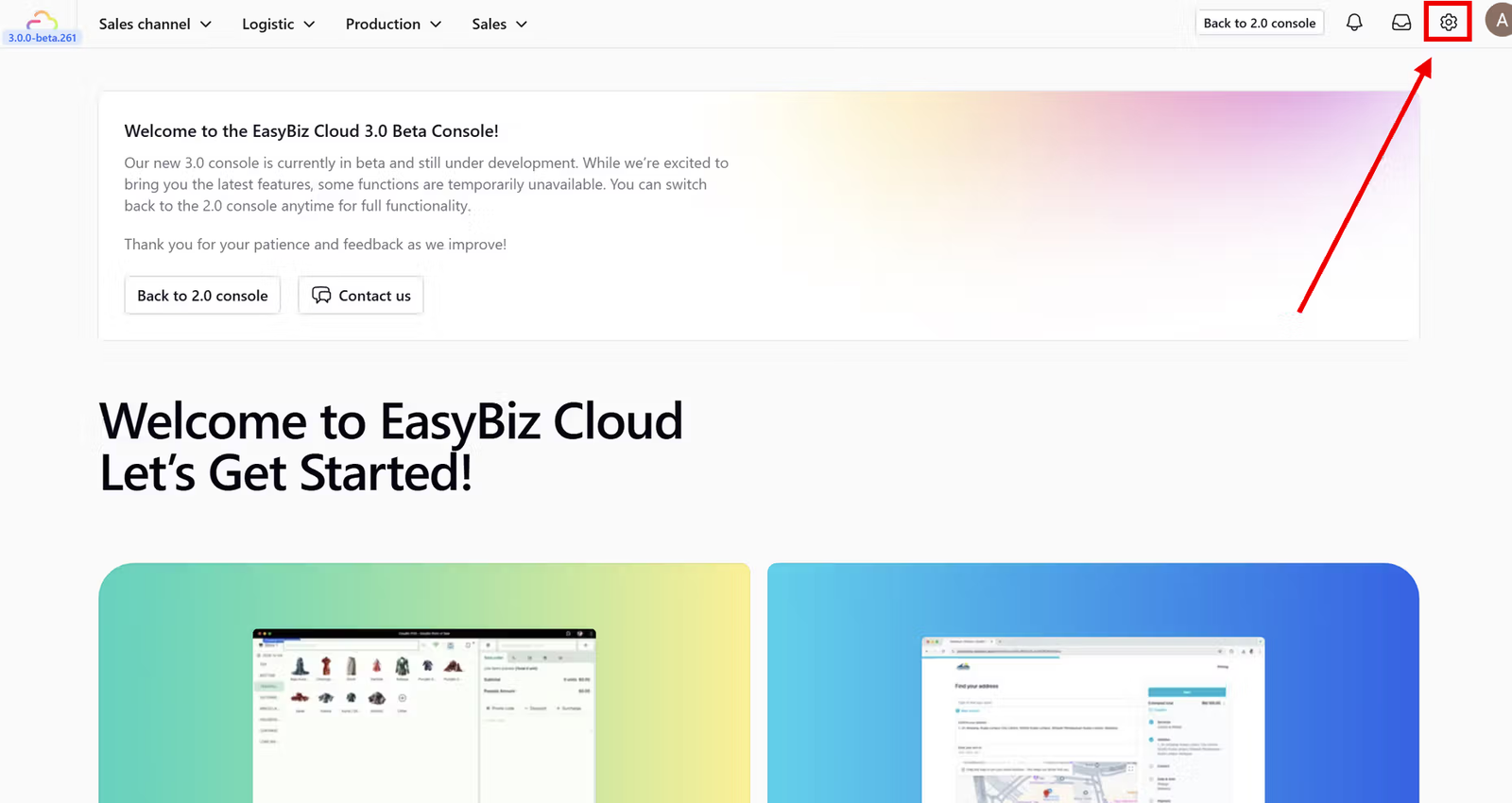
First, navigate to the main menu on your console dashboard and open Settings.
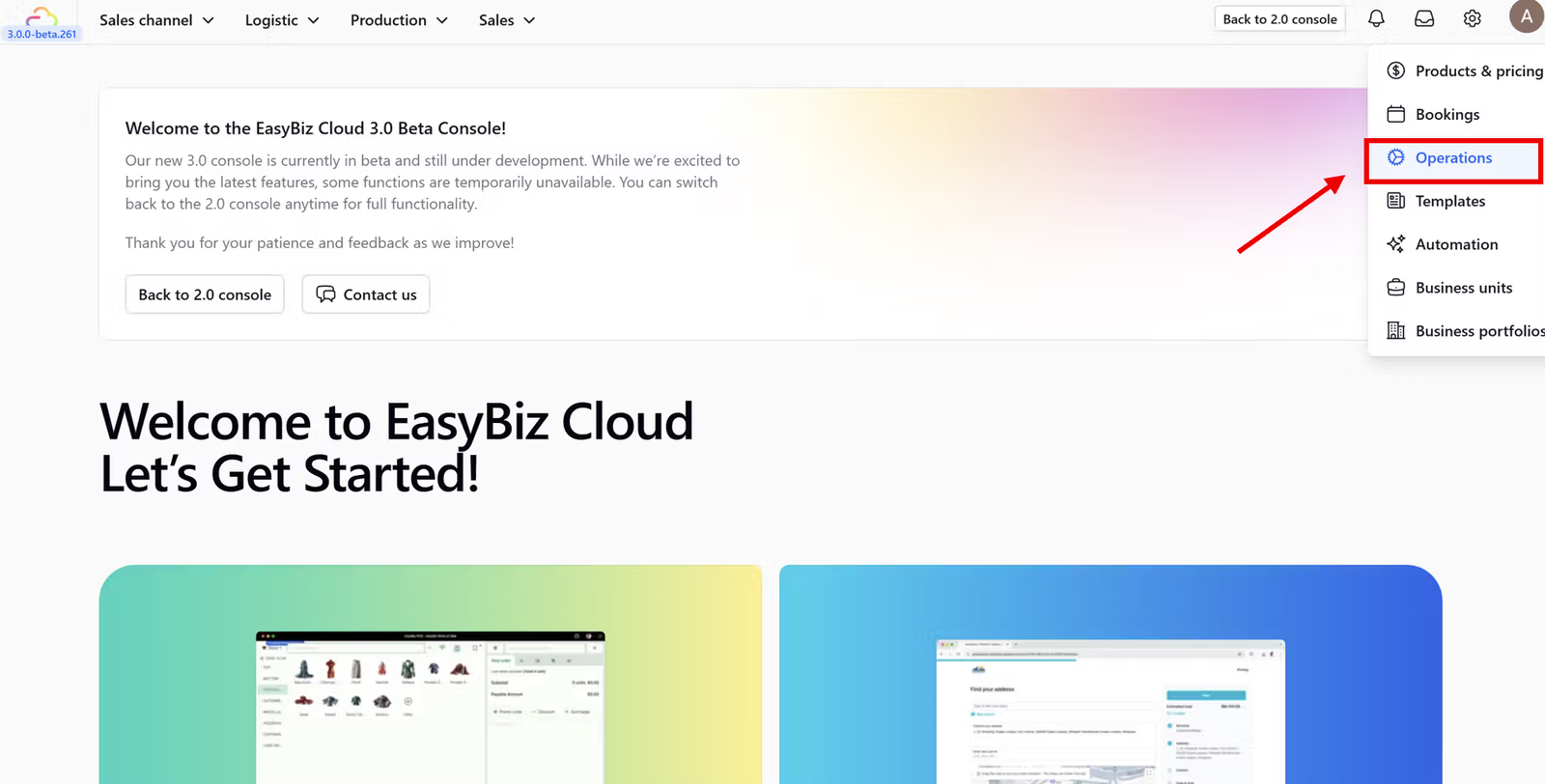
Next, from the side menu options, select the Operations section.
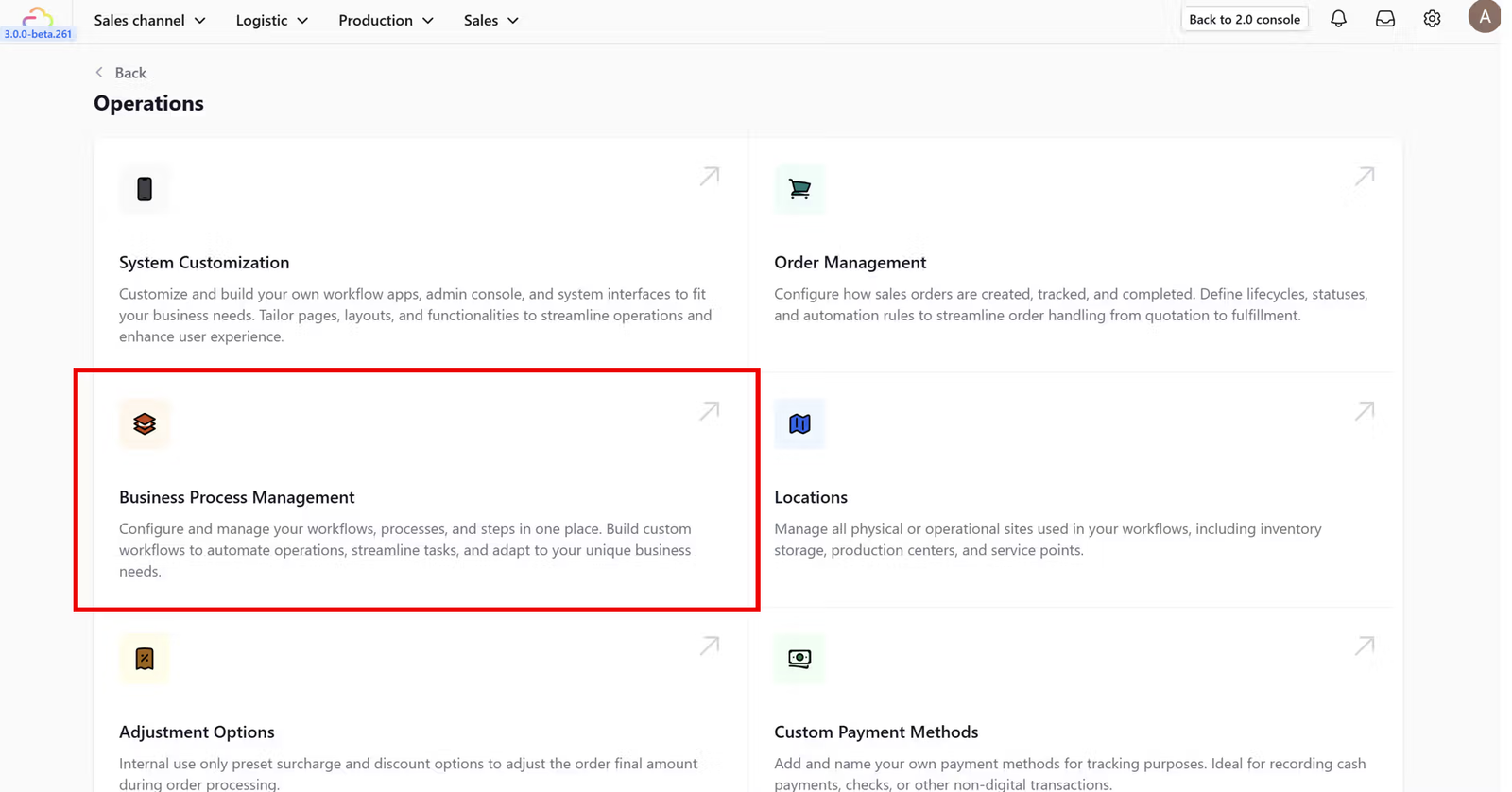
Within the Operations dashboard, find and click on the Business Process Management feature card.
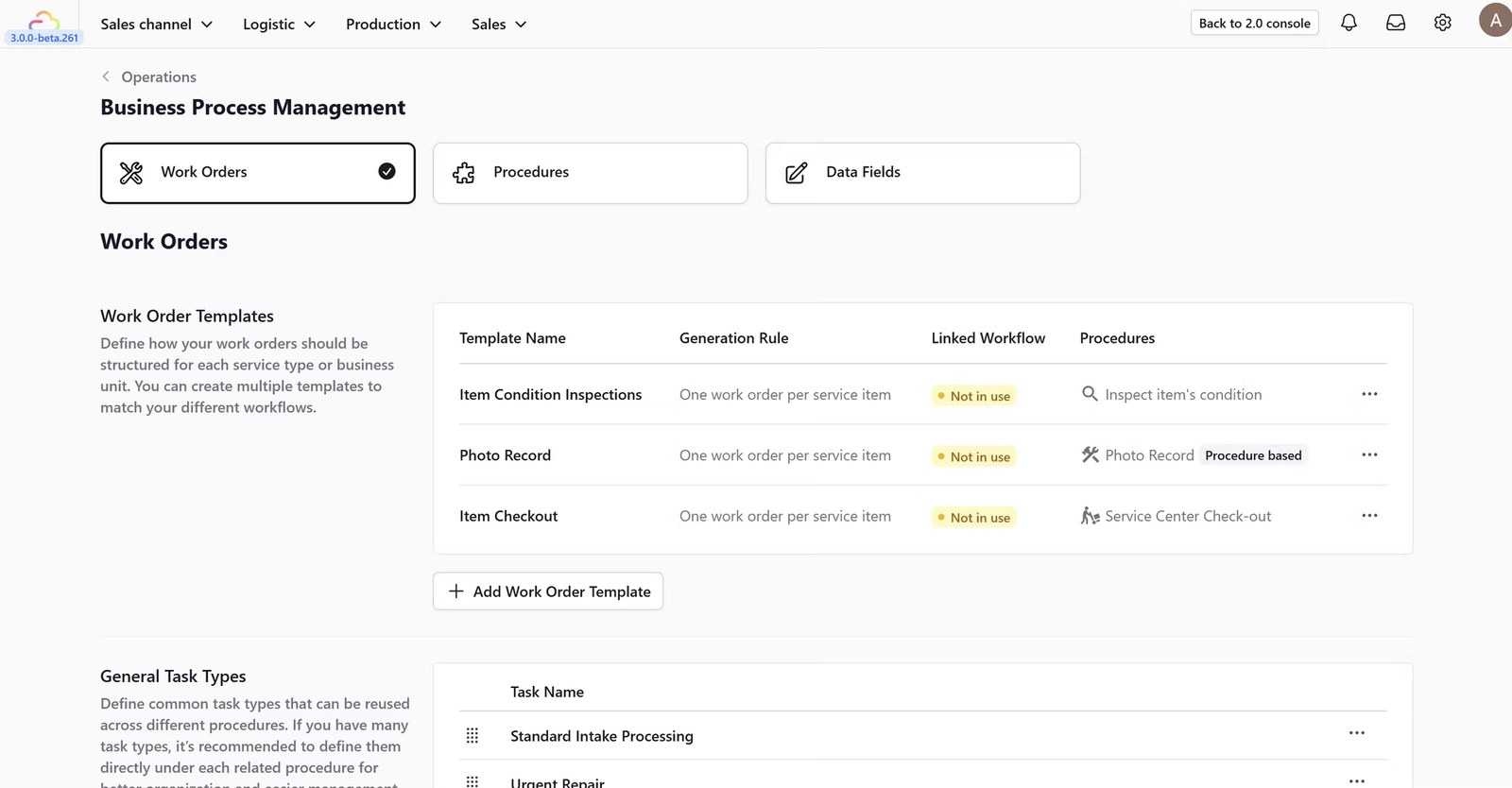
This feature allows you to define how your work orders should be structured for each service type or business unit, enabling you to create multiple templates to match different workflows. (A setup guide on how to use this feature is available on the Work Orders page).
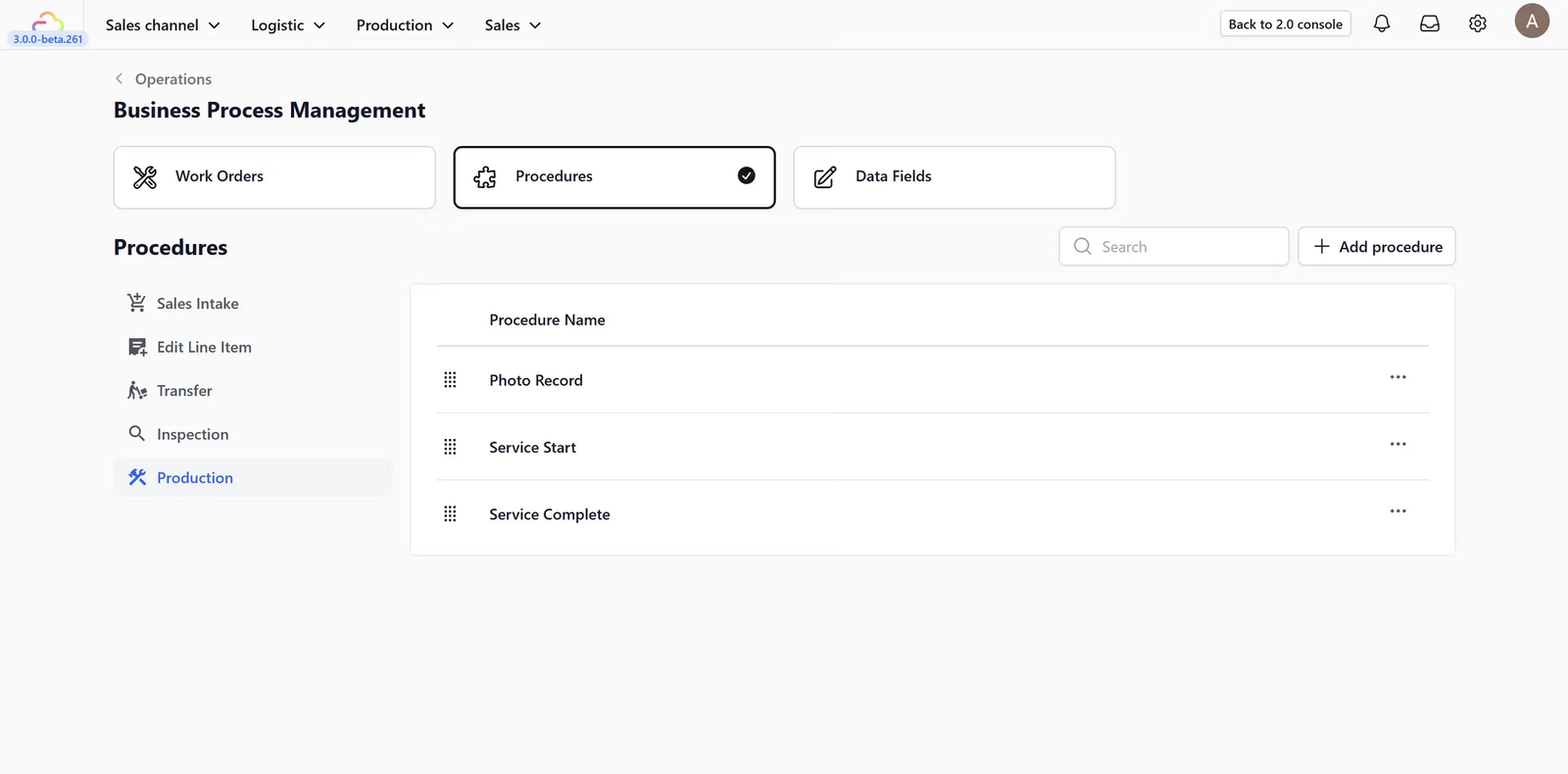
This feature is used to manage standard operating procedures. (A setup guide on how to use this feature is available on the Procedures page).
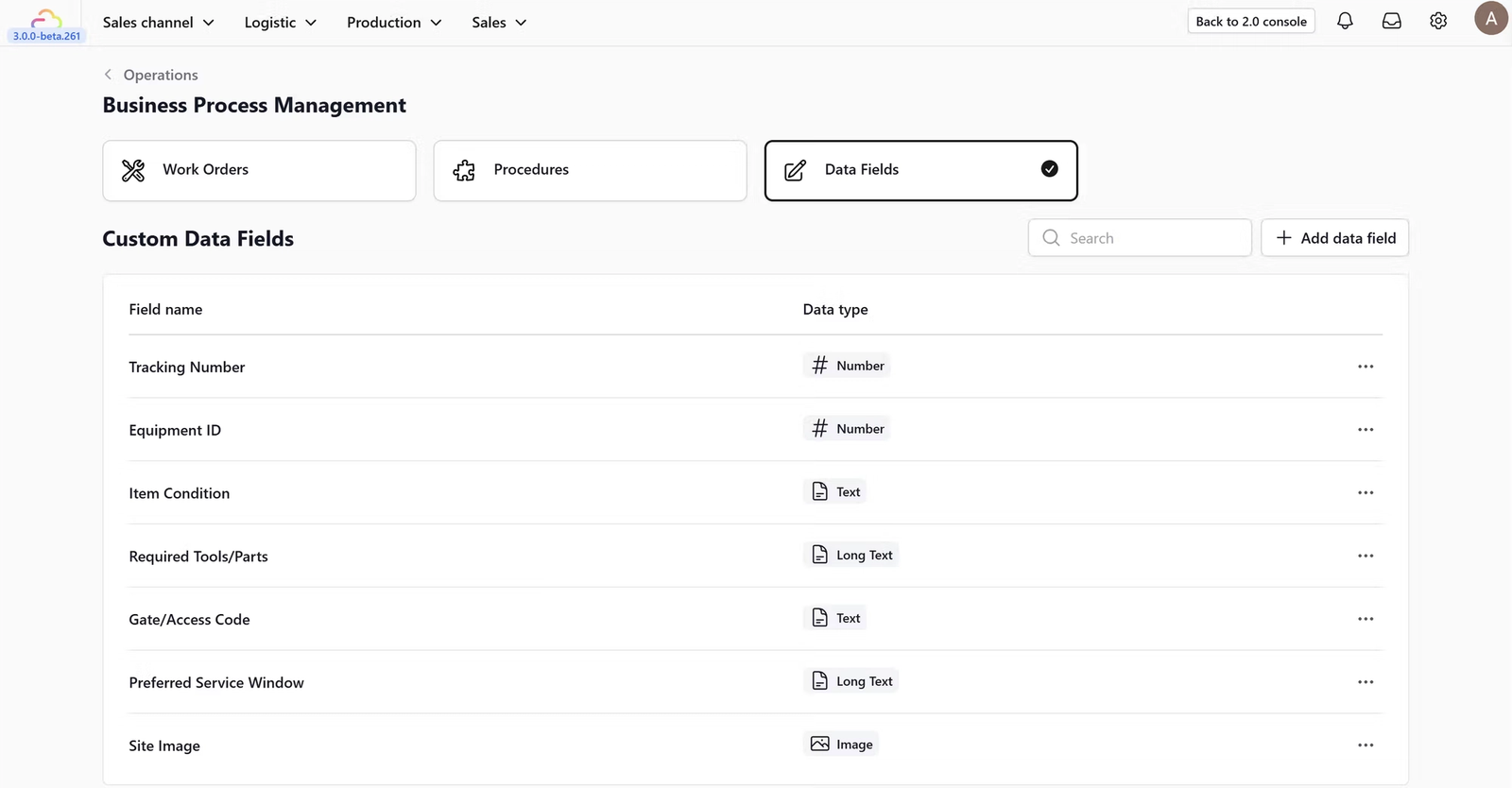
Data Fields: This feature allows you to manage custom data fields that can be used within your workflows. (A setup guide on how to use this feature is available on the Data Fields page).
Give feedback

Up next
Introduction to Business Process ManagementLearn what BPM is and how it helps your service business run smoother.
Read more